Value Cost Averaging (VCA) is a powerful investment strategy that involves investing a fixed amount of money in a particular asset at regular intervals, regardless of the asset’s price. This approach can help mitigate the impact of market volatility and potentially lead to higher returns over the long term.
At EuroBliss Investonics Launchpad, we believe that VCA can be a valuable tool for investors, especially in the dynamic and often volatile world of cryptocurrencies and digital assets. Our team of experts has extensive experience in the crypto market and can provide you with the guidance and support you need to implement VCA effectively.
How Value Cost Averaging Works
The basic principle of VCA is to invest a fixed amount of money in an asset at regular intervals, such as weekly, monthly, or quarterly. When the asset’s price is low, you’ll buy more shares. When the price is high, you’ll buy fewer shares. Over time, this approach can help you average down the cost of your investment and potentially increase your returns.
Features of Value Cost Averaging (VCA)
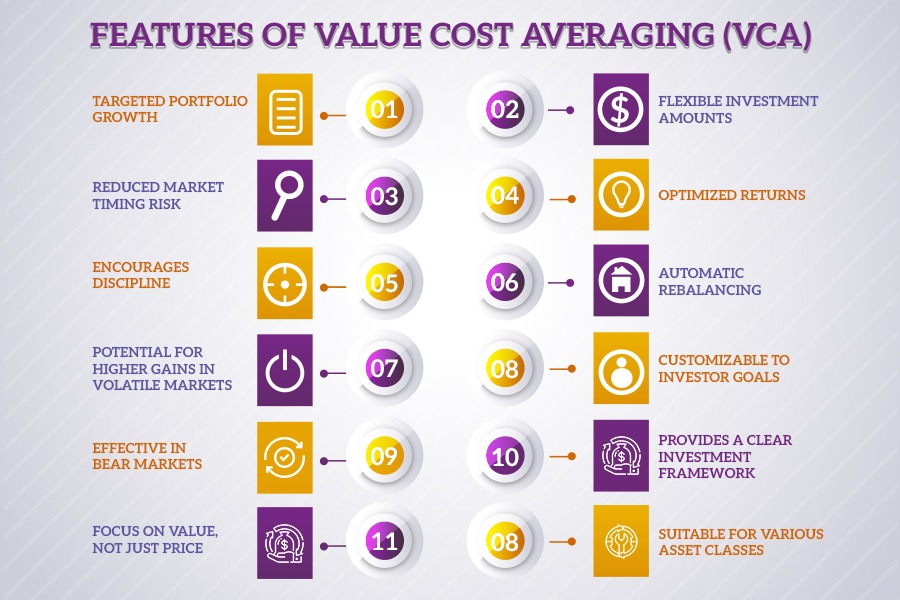
- Targeted Portfolio Growth: VCA focuses on achieving a specific portfolio value at the end of each investment period, helping investors stay on track toward their financial goals.
- Flexible Investment Amounts: Unlike fixed periodic investments, VCA allows the investment amount to vary based on market conditions. More funds are allocated when prices are low, and fewer funds (or even withdrawals) when prices are high.
- Reduced Market Timing Risk: VCA helps mitigate the risk of investing a large sum of money at the wrong time. By systematically adjusting the amount invested, it reduces exposure to market volatility.
- Optimized Returns: The strategy aims to buy more units when prices are lower and fewer units when prices are higher, which can potentially lead to optimized returns over the long term.
- Encourages Discipline: VCA requires consistent monitoring and adjustment of investments, fostering a disciplined approach to investing and encouraging a focus on long-term financial goals.
- Automatic Rebalancing: VCA naturally leads to a rebalancing of the portfolio, as it adjusts the amount invested to maintain the desired portfolio value, ensuring that the investment aligns with the target.
- Potential for Higher Gains in Volatile Markets: VCA can take advantage of market fluctuations by buying more when prices are low and less when prices are high, potentially leading to higher gains in volatile markets.
- Customizable to Investor Goals: The strategy can be tailored to individual investor preferences, such as risk tolerance, investment horizon, and target value, making it a versatile option for various investment goals.
- Effective in Bear Markets: In declining markets, VCA allows investors to accumulate more units at lower prices, potentially resulting in significant gains when the market eventually recovers.
- Provides a Clear Investment Framework: With a predefined target and a systematic approach to achieving it, VCA provides investors with a clear framework for making investment decisions.
- Focus on Value, Not Just Price: VCA emphasizes maintaining a certain value in the portfolio, shifting the focus from mere price movements to the overall growth of the investment.
- Suitable for Various Asset Classes: VCA can be applied across different types of investments, including stocks, bonds, mutual funds, and ETFs, offering flexibility to diversify portfolios effectively.
Value Cost Averaging Tips for Crypto Investing
Value Cost Averaging (VCA) is a powerful strategy for building a solid crypto portfolio. Here are key tips:
- Set clear goals: Define your financial targets.
- Understand assets: Focus on early-stage projects in DeFi, NFTs, and Metaverse.
- Choose suitable assets: Select assets aligned with your risk tolerance and horizon.
- Monitor market trends: Stay informed about market conditions.
- Be consistent and disciplined: Stick to your investment plan.
- Take advantage of dips: Invest more when prices are low.
- Diversify: Avoid overconcentration in one asset.
- Leverage sustainable investments: Consider sustainability factors.
- Reassess target values: Periodically review your goals.
- Be prepared for long-term commitment: VCA works best over the long term.
- Use tailored investment solutions: Consider EuroBliss’s offerings.
- Understand risks: Be aware of the risks involved.
Conclusion
Value Cost Averaging is a strategic approach that helps investors manage risk, optimise returns, and maintain focus on their financial goals. It’s particularly beneficial for those looking to invest systematically in volatile markets while keeping their investment aligned with a targeted value over time.
FAQs
Complexity: Requires more monitoring and adjustment compared to Dollar Cost Averaging.
Market Downturns: In a prolonged market decline, investors may end up investing more without seeing any immediate return.
While VCA can be beneficial for many investors, it may be more suited for those who are comfortable with a hands-on approach and have a good understanding of market conditions. Beginners might prefer simpler strategies like Dollar Cost Averaging.
While both strategies aim to reduce the impact of volatility, VCA actively adjusts the investment amount based on portfolio performance, whereas Dollar Cost Averaging invests a fixed amount regardless of market conditions.
Some investment platforms offer automated investing features that can help implement VCA by adjusting contributions based on predefined rules, although they may not fully replace the need for monitoring.
SIP Value Cost Averaging is a strategy where you invest a fixed amount of money in a mutual fund at regular intervals, typically monthly. This method helps you to average out the cost of your investment over time, regardless of market fluctuations.